
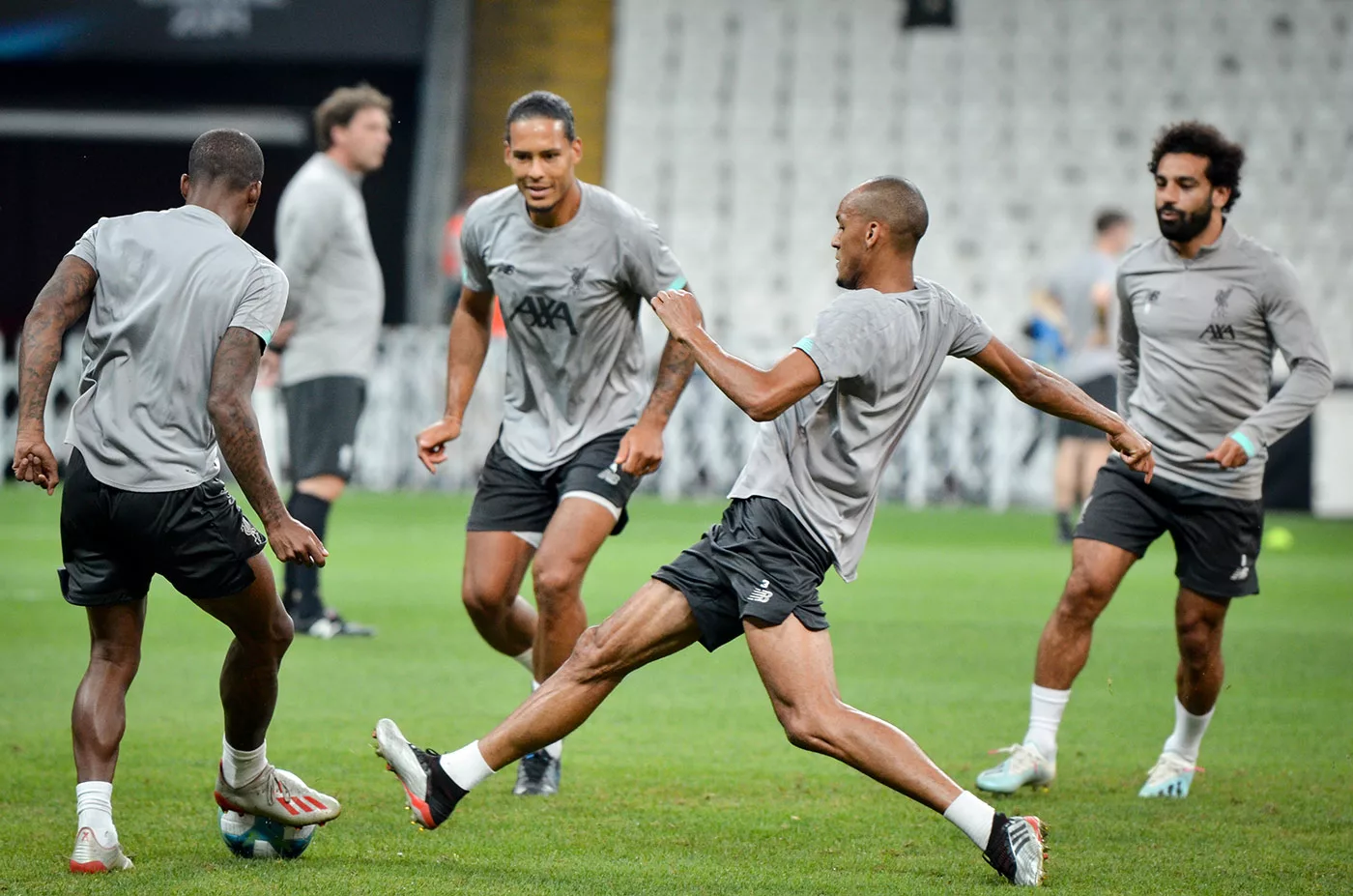
The midfielder had been the best player on the pitch for twenty minutes.
Everything seemed to arrive at the right speed. He received the ball on the half-turn, escaped pressure before it fully formed and twice slipped passes through the defensive line that left the people along the touchline making that small involuntary sound reserved for something they had not expected to see. Each successful touch seemed to loosen him further. By the fifteenth minute, he was asking for the ball in spaces where he had ignored it at the beginning of the match, turning toward defenders instead of away from them and playing with the peculiar lightness that appears when an athlete temporarily stops wondering whether he belongs.
Then he lost the ball.
There was nothing extraordinary about the mistake. He tried to turn inside, the defender read it, stepped across him and carried possession away. Thirty seconds later the match had moved somewhere else.
The midfielder had not.
When the ball came back to him, he played it safely behind him. A few minutes later, he had room to turn and did not. The next time the forward checked into space between the lines, the pass was there for a fraction of a second, but the midfielder hesitated and the moment closed.
He was still the same player who had dominated the opening of the match. His legs had not become weaker. His touch had not disappeared. The defender had not suddenly become faster.
Something less visible had changed.
By halftime, he was playing not to make another mistake.
I have always found that transformation fascinating because it can happen so quickly. Confidence can arrive in ten minutes and disappear in one bad touch. A striker scores early and starts making runs he would not have attempted the week before. A goalkeeper makes two difficult saves and suddenly begins claiming crosses with both arms extended as though the penalty area belongs to him personally. A winger beats the fullback once, then again, and by the third attempt there is almost a little swagger in the way he asks for the ball.
The game has not become easier.
The player has simply begun expecting himself to succeed.
That expectation can be intoxicating.
A confident player sees the pass before the doubt arrives. He shoots without holding the internal committee meeting that usually delays the decision. He asks for responsibility because somewhere inside him the evidence has begun accumulating in his favor. Training has gone well. The body feels strong. The manager trusts him. The last match went well. Maybe the last four did.
For a while, confidence can feel almost indistinguishable from strength.
That is probably why we confuse them.
The distinction usually appears when the evidence changes.
A week later, imagine the same player walking toward the team sheet pinned to the wall before a match. He has trained well and expects to start. He scans the names once, then again, because his is not where he expected it to be.
Substitute.
There is a brief physical reaction before the thinking catches up. Heat. Anger. Embarrassment. Perhaps the sense that somebody has made a mistake and will eventually have to explain it.
The manager walks past.
The player says nothing.
What happens next will tell us much more about him than the match in which everything worked.
He can spend the afternoon quietly withdrawing. Nothing dramatic enough for the coach to confront, just a little less encouragement from the bench, a slightly slower warm-up, an inward satisfaction when the player selected ahead of him miscontrols the ball.
Or he can be furious and still prepare properly.
Those two things are allowed to coexist.
He does not have to pretend the decision did not hurt. He does not have to perform serenity. He can think the manager is wrong and still sprint during the warm-up because if his number is called in the sixty-eighth minute, the match will not care that he spent the previous hour feeling mistreated.
That is where the thing I would call inner strength begins to separate itself from confidence.
Confidence had helped him when everything was moving in the right direction. Inner strength becomes useful when the direction changes.
The difference is not visible in the same way.
Confidence has posture. It asks for the ball. It takes the penalty. It looks directly at the person across the table and says, “I can do this.”
Inner strength often looks considerably less dramatic.
Sometimes it is a player tying his boots properly after discovering he is not starting.
Sometimes it is returning to training on Monday after being responsible for the goal that eliminated your team on Saturday.
Sometimes it is watching film of your own mistake when every instinct tells you to find a reason the mistake was really someone else’s.
The strongest people I have known are not always the people who appear most certain. In fact, certainty can become a trap.
A young player can look extraordinarily confident while the game is still confirming everything he believes about himself. Coaches praise him. Teammates seek him out. Supporters chant his name. Every successful match seems to strengthen a simple conclusion: I am good at this.
There is nothing wrong with that conclusion.
The danger arrives when the player begins needing the next match to prove it again.
Now confidence has become expensive.
A poor performance no longer means he played poorly. It threatens the story he has built about himself. Criticism becomes harder to hear because it feels less like information and more like an attack. The manager says his defensive work was inadequate and he begins assembling reasons the manager did not understand the tactical situation. A teammate suggests he released the ball too slowly and he remembers all the chances he created that nobody finished.
The player is no longer protecting his performance.
He is protecting himself from the possibility that the performance means something larger.
I think this is where bad confidence begins.
It is not too much belief.
It is belief that has become dependent on being continuously validated.
The distinction becomes especially clear at the penalty spot.
Imagine the match is level and nearly finished. The referee points to the spot. The stadium changes immediately. Everyone becomes louder and yet somehow the player walking toward the ball hears less.
There is a particular kind of loneliness in those few steps.
The confident player may genuinely believe he is going to score. His technique has been good in training. He knows where he wants to place the ball. He has scored his last three.
That confidence is useful.
But there is another player who may feel something slightly different.
He knows he could miss.
He has seen better players miss.
He knows the goalkeeper could guess correctly, the standing foot could slip or the ball could strike the post hard enough to bounce twenty yards back into the field.
He takes the penalty anyway.
Not because he possesses some mystical certainty about the outcome, but because he does not require certainty before acting.
That is a much deeper form of strength.
The player with fragile confidence needs the penalty to go in because the result is doing double duty. It determines the score and it helps determine how he feels about himself.
The player with inner strength desperately wants to score, but the ball does not carry his entire identity toward the goal.
If he misses, he will have to live with it.
He knows that.
He also knows he can.
That knowledge changes the walk toward the spot.
Not dramatically. He does not become fearless. I distrust the word fearless anyway. Fear is often present in moments that require courage.
He simply stops asking fear for permission.
Discipline enters here almost without announcement.
The player who missed the penalty goes home angry. He may sleep badly. He may replay the moment more times than is useful. The next morning, confidence is nowhere to be found.
He trains.
Not brilliantly. Not heroically.
He trains because training is what Monday requires.
This is the part of excellence that photographs badly.
We like the visible moment when confidence returns. The next goal. The celebration. The redemption story. What we rarely see is the stretch in between, when the athlete still doubts himself and behaves professionally anyway.
That stretch matters because confidence is fickle. It responds to results, praise, form, physical condition and thousands of small signals an athlete cannot completely control.
Discipline is less interested in mood.
It asks what the standard requires today.
That question sounds severe until you watch someone use it properly.
The striker does not punish himself with extra running because he missed. He returns to the work that made him reliable in the first place. He repeats the finishing pattern. He studies the goalkeeper’s movement. He recovers properly. He does not attempt to erase one bad moment with a week of frantic overcorrection.
There is calm in that kind of discipline.
It is not self-destruction disguised as commitment.
It is continuity.
The same quality appears after success, although people notice it less often.
A young forward scores in four consecutive matches. Suddenly reporters know his name. Larger clubs are rumored to be watching. Supporters wait for him after matches.
The world begins behaving as though something important has changed.
In some ways, it has.
Inside the training ground, however, the ball still requires the same first touch.
This is where success begins testing him differently.
He can arrive a few minutes later because everybody knows he will start. Recovery can become slightly optional. The coach’s corrections can begin sounding unnecessarily fussy because the goals are still coming.
Nothing collapses immediately.
That is what makes success so dangerous.
Standards usually erode before performance does.
By the time the performance follows, the habits that produced it may already have disappeared.
The strongest player notices the temptation.
He enjoys the goals. He enjoys the attention. He should.
Then he trains.
Not because he is afraid success will disappear if he stops smiling for five minutes, but because the work did not become less necessary merely because people started noticing it.
This is the point at which inner strength and discipline become difficult to separate.
The player has developed a sense of himself that is not rebuilt after every match.
He can score twice and still hear the coach tell him his positioning was poor.
He can play badly without needing to invent a story about why it was someone else’s fault.
He can be selected without becoming entitled and dropped without becoming useless.
That does not mean results stop mattering.
Quite the opposite.
He can care intensely because the result no longer has to answer a second question about his worth.
A bad match can remain a bad match.
A missed penalty can remain a missed penalty.
A tactical mistake can be studied as a tactical mistake rather than interpreted as evidence that he has been exposed.
That separation gives him room to learn.
I suspect this is why genuinely strong performers can sometimes be startlingly candid.
They will walk into an interview after a defeat and say, “I was poor.”
No elaborate defense.
No attempt to hide behind collective language.
No insistence that the conditions were difficult, even if they were.
The sentence sounds simple because the person saying it does not believe the admission destroys anything essential.
He can afford the truth.
Fragile confidence struggles with truth because truth may damage the image.
Inner strength can use truth because the image is no longer the foundation.
Over time, the player begins accumulating a different kind of evidence.
Not evidence that he will always perform well.
He knows better than that now.
He accumulates evidence that he can survive playing badly and return.
He can be dropped and continue.
He can be praised and remain disciplined.
He can be criticized and listen long enough to determine whether the criticism is useful.
He can lose without collapsing into excuse.
He can win without becoming unbearable.
None of this happens in one great psychological breakthrough.
It grows slowly, often in moments that felt miserable while they were happening.
The first time he comes back after a mistake, he learns something.
The first time he sits on the bench and still prepares properly, he learns something else.
The first time he admits that an opponent was better than he was, then discovers that the admission did not diminish him, another piece settles into place.
Eventually the athlete who once needed evidence that everything was going well has a more durable kind of evidence.
He knows what he does when it does not.
That is inner strength.
Years later, people may remember the great performances.
They will remember the goals, the decisive passes, the trophies and the afternoons when the player seemed almost impossibly confident.
The player may remember different moments.
The week he could not complete a pass and still went to training.
The match he watched from the bench.
The penalty he missed.
The coach who told him something he desperately did not want to hear.
The morning after the newspaper said he was finished.
These are rarely the moments that make the highlight reel, but they are often the ones that explain why the highlight reel continued.
Confidence deserves its place.
A player without confidence becomes cautious, and caution can strangle talent. Skill needs enough belief to become action. The great pass has to be attempted before it can become great.
But confidence should remain a tool.
The moment it becomes the foundation, every failure begins threatening the entire structure.
Inner strength is quieter.
It is built from repetition, standards and the disciplined refusal to make each result responsible for explaining who you are.
Late in the match, the midfielder from the opening receives the ball again.
He has spent most of the second half playing safely. The mistake from earlier is still somewhere in his mind, not as vividly as before, but enough that he can feel the old temptation when the forward moves between the defenders.
The pass is there.
For a fraction of a second, he hesitates.
Then he plays it.
Maybe it reaches the forward.
Maybe the defender intercepts it.
That is almost beside the point.
The important thing happened before the ball left his foot.
He stopped asking the previous mistake what he was allowed to do next.