
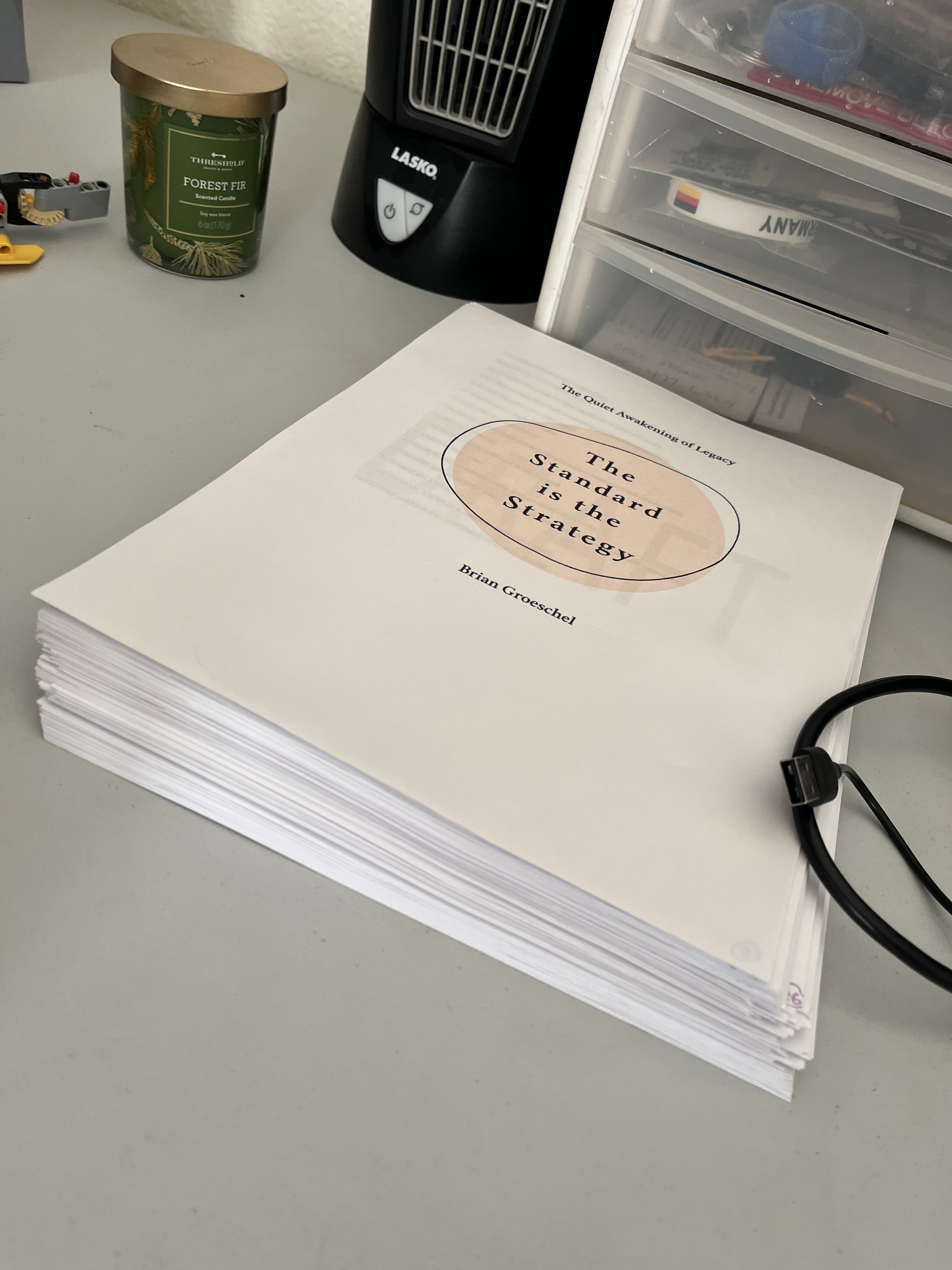
Serve Like It Matters. Compete Like It Counts.
This is the most important work I have ever written.
Every idea I have studied. Every leader I have observed. Every system I have built. Every failure I have learned from. All of it converges here.
The Four Rooms of Excellence is the summation of my architecture for elite performance. It is the framework that sits beneath The Standard Is the Strategy. It is my clearest statement on how excellence is designed, sustained, and protected inside any human system.
If you lead others, if you shape culture, if you influence standards in any environment, I believe this is a must read.
The Architecture of the Four Rooms
Excellence is not an accident. It is the result of a leader’s willingness to move through the right rooms, learn from each one, and integrate what those environments teach. After thirty years of studying performance across medicine, hospitality, sport, and creative work, I have learned a simple truth. Each room holds a different dimension of excellence. Each room shapes a different part of the human experience. The leaders who rise are the ones who learn to walk through every room with discipline.
Most people spend their lives in one room. They master a single domain, then build their identity around that space. The result feels familiar, but it limits growth. A surgeon who never studies hospitality may deliver technical results but fail to build trust. A coach who never studies creative work may develop toughness but struggle with reinvention. A hotel manager who never studies sport may deliver comfort but fail to sharpen competitive instincts. Miss the other rooms, and the architecture of excellence becomes incomplete.
The four rooms of excellence are not metaphors. They are real environments. They shape standards. They shape culture. They shape behavior. They shape outcomes. When we study them together, we learn how elite performance is built, refined, protected, and renewed.
This is the work. Walk through the rooms. Study their discipline. Honor their lessons. Apply them with care.
Room One: Medicine and the Architecture of Precision
Medicine is the room of structure, safety, and disciplined design. It is the room where the consequences of inconsistency are immediate and unforgiving. The operating room teaches a leader to respect the weight of a decision. It teaches the discipline of preparation, the clarity of roles, and the science of reliable systems.
Nothing in medicine is casual. Every protocol has a reason. Every checklist removes avoidable risk. Every handoff protects a human life. Surgeons operate inside controlled environments because excellence cannot rely on memory or mood. It must rely on design.
In this room the leader learns three essential truths.
First, precision is kindness. Patients deserve reliability, not improvisation.
Second, discipline is safety. Teams perform at their best when the environment protects them from error.
Third, structure is freedom. The right system releases cognitive load and sharpens focus.
Medicine shows leaders how to build organizations where people cannot fall through the cracks. It teaches rigorous accountability. It teaches the importance of telemetry and feedback. It teaches that excellence is measured by what does not go wrong.
Leaders who learn this room build systems that hold their teams. Systems that guide behavior. Systems that support execution. Systems that protect people from drift.
Medicine builds the architecture. The other rooms fill it with life.
Room Two: Hospitality and the Architecture of Care
Hospitality is the room that teaches generosity, attention, and the emotional dimension of leadership. It is the room that reminds us that excellence is not only technical. It is relational. It is human. It is the discipline of making another person feel valued.
At Ritz Carlton, service is identity. At Eleven Madison Park, service is choreography. In both spaces, excellence is delivered with grace. The guest feels seen because the staff anticipates needs. The environment feels effortless because every detail has been engineered. Hospitality looks soft from the outside, but inside it sits on a foundation of discipline that rivals medicine.
This room teaches leaders that care is not sentiment. Care is design. It is the structured practice of elevating another person’s experience. It is the courage to serve with intention. It is the belief that people will rise when they are treated with dignity.
Three lessons sit at the center of this room.
First, attention is the highest form of respect. When leaders notice the small things, people feel valued.
Second, anticipation builds trust. When the environment meets needs before they appear, people relax and perform.
Third, humanity scales only with discipline. Warmth without structure collapses under pressure.
Hospitality does not replace competition. Hospitality prepares people to compete with confidence. When people feel safe, they take risks. When people feel valued, they innovate. When people feel dignity, they rise.
Hospitals should feel this. Locker rooms should feel this. Offices should feel this. Excellence requires care.
Room Three: Sport and the Architecture of Competitive Mastery
Sport is the room that hardens instinct and sharpens execution. It is the room where training becomes identity and identity becomes performance. It is the room where feedback is immediate and results are honest. There is no interpretation on the scoreboard. It reflects preparation. It reflects discipline. It reflects the truth.
Sport teaches leaders the power of repetition, the science of preparation, and the discipline of consistency. Athletes know that the body remembers what the mind forgets. They know that excellence becomes instinct only through relentless practice. They know that accountability is not personal. It is essential to the mission.
In this room leaders learn three more truths.
First, effort without structure fails under pressure. A team competes the way it prepares.
Second, trust is built in training, not performance. Teams win when the work becomes collective.
Third, clarity drives results. Vague expectations produce vague execution.
The training pitch teaches something hospitality cannot teach. The mental grind required to compete at scale. The willingness to repeat fundamentals until they become unconscious. The courage to be held accountable by teammates who expect more.
This room is not gentle. It is not comfortable. It is necessary.
Sport shows leaders how to build cultures where excellence is not requested. It is expected.
Room Four: Creativity and the Architecture of Renewal
Creativity is the room that keeps the other three alive. It is the space where reinvention occurs. It is the place where identity is reimagined. Without creativity, structure calcifies, care grows stale, and competition becomes rigid.
Creative work teaches a leader how to navigate ambiguity. It teaches the courage to start again. It teaches that excellence requires renewal, not repetition. Artists understand something athletes often forget. Reinvention is not chaos. Reinvention is discipline.
Blink 182 rebuilt itself across decades by honoring its core while exploring new edges. Taylor Swift designs eras with the precision of a strategist and the courage of a storyteller. Creative excellence is not a spark of inspiration. It is a system of renewal.
Three lessons anchor this room.
First, reinvention is a skill, not an accident.
Second, curiosity fuels endurance.
Third, culture evolves only when leaders risk new work.
This room protects teams from stagnation. It keeps the work fresh. It keeps excellence alive. It turns standards into living systems that adapt and grow.
The Synthesis: Excellence Lives in All Four Rooms
Most leaders overdevelop one room and ignore the others. They become structured but cold. Caring but inconsistent. Competitive but brittle. Creative but unfocused. Excellence collapses when any room dominates.
The leaders who rise build fluency across all four.
Medicine teaches precision.
Hospitality teaches care.
Sport teaches competitive mastery.
Creativity teaches renewal.
Together, they form a complete architecture of human performance. Together, they shape environments that honor people and elevate results. Together, they turn identity into culture and culture into outcomes.
The work is to walk through each room with intention. Study each discipline. Absorb its lessons. Then build a culture that reflects the whole.
Excellence lives in the integration.
A Personal Reflection on Rooms
The kitchen is where my family gathered, shared, and dreamed. It was the first room that taught me the power of hospitality. It taught me that people rise when they feel seen. It showed me that attention is a form of love and that care shapes identity.
The office is different. It is the room where I forge ahead in this journey. It is where discipline takes form. It is where the work becomes structured and purposeful. It is where ambition is shaped into practice.
The kitchen gave me belonging.
The office gives me direction.
Together they explain why these four rooms matter to me and why I believe they matter to anyone who seeks excellence.
Conclusion
The four rooms are not separate worlds. They are connected spaces that shape how human beings rise. When leaders learn to serve like it matters and compete like it counts, when they learn to design with precision and renew with courage, they create cultures that refuse to break.
The future of leadership belongs to those who master the rooms. The future belongs to those who build architecture that honors people and demands excellence. The future belongs to those who choose all four.
Reflection
Which room is your strength, and which room have you avoided? How will you move through every room to elevate your culture?
